
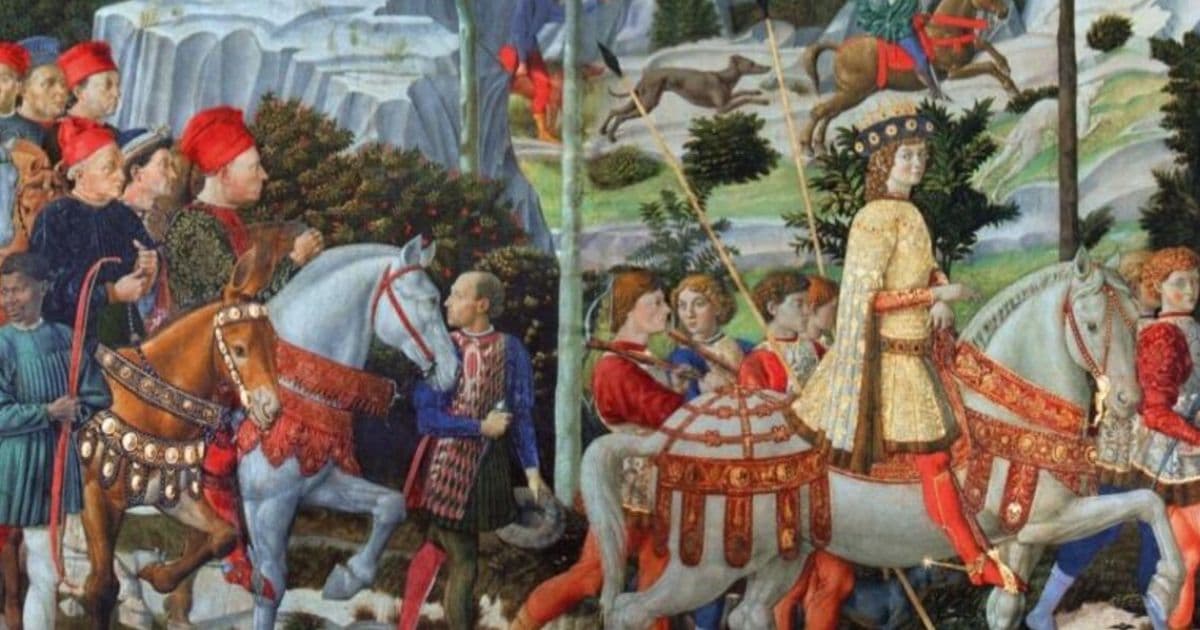
What to expect ahead
What follows is a compact summary of each chapter in the book, designed to help you quickly grasp the core ideas while inviting you to continue into the full original text. Even when chapter text is presented here, these summaries are meant as a gateway to understanding, so your eventual reading of the complete book feels richer, deeper, and more fully appreciated.
The Prince
A Brief Description
The Prince is the most famous—and infamous—book ever written about power. In 1513, Niccolò Machiavelli, a Florentine diplomat who'd lost everything in political upheaval, wrote this short treatise as a job application to the Medici family. He wanted to prove he understood how power actually works, not how philosophers say it should work. The result was so shocking that "Machiavellian" became a synonym for ruthless manipulation.
Machiavelli's central claim is brutal in its honesty: the methods that make you a good person will make you a failed leader. Kindness, honesty, keeping your word—these virtues will get you destroyed by competitors willing to lie, betray, and kill. A prince who tries to be consistently good "will come to ruin among so many who are not good." Success requires understanding when virtue serves you and when it's a liability.
But The Prince isn't advocating evil for its own sake. Machiavelli is describing a harsh reality: in politics and competition, those who refuse to understand power dynamics will be crushed by those who do. He's not celebrating cruelty—he's saying that if you want to survive and succeed in arenas where others play ruthlessly, you need to understand their game. Refusing to learn these rules doesn't make you virtuous; it makes you a victim.
What makes The Prince radical is its complete rejection of idealism. Most political philosophy describes ideal states or ideal rulers. Machiavelli describes what actually works. He studies historical examples—Cesare Borgia, various Roman emperors, contemporary Italian city-states—and extracts patterns. When does cruelty serve a leader's goals? When does mercy? When should you keep your word, and when should you break it? These aren't moral questions for Machiavelli; they're strategic ones.
Through Intelligence Amplifier™ analysis, you'll learn to read power dynamics in any environment—corporate, political, social. You'll understand when people are performing virtue versus genuinely embodying it. You'll recognize manipulation tactics and strategic positioning. Most crucially, you'll develop the ability to see situations as they are rather than as you wish they were.
The Prince is controversial because it forces you to confront an uncomfortable truth: the world rewards strategic thinking, not just good intentions. Understanding power doesn't require using it ruthlessly—but not understanding it guarantees that ruthless operators will use power against you. Machiavelli gives you the map. What you do with it is your choice.
Essential Life Skills Deep Dive
Explore chapter-by-chapter breakdowns of the essential life skills taught in this classic novel.
Reading Power Dynamics in Any Situation
12 chapters teaching you to see who actually holds power, how they maintain it, and what they'll do to keep it.
Distinguishing Performance from Reality
Learn to see what people actually do versus what they say—and why appearances often matter more than truth.
When Ethics Become Weapons
Understand how to navigate competitive environments where others use your ethical constraints against you.
Essential Skills
Life skills and patterns this book helps you develop—drawn from its themes and characters.
Reading Power Dynamics in Any Situation
Learn to see who actually holds power in any environment, how they maintain it, and what they'll do to keep it. Understand the difference between formal authority and real influence.
Distinguishing Performance from Reality
Recognize when people are performing virtue, competence, or loyalty versus genuinely embodying these qualities. Learn to see what people do versus what they say.
Understanding Strategic vs. Moral Thinking
Develop the ability to analyze situations strategically—what will actually work—separately from how you wish things worked. This doesn't require abandoning morality; it requires seeing reality clearly first.
Recognizing Manipulation Tactics
Identify the specific techniques people use to control others: creating dependencies, strategic generosity, cultivating fear, managing appearances, controlling narratives. See these patterns before they trap you.
Navigating Environments Where Ethics Are Weaponized
Understand how to operate in competitive environments where some players use your ethical constraints against you. Learn when integrity serves you and when it makes you vulnerable.
Building Power vs. Maintaining Power
Recognize that acquiring power and keeping power require different strategies. Understand why leaders who rise through boldness often fall through the same traits, and how successful leaders adapt.
Managing Perception and Reputation
Learn why appearing competent, strong, and reliable often matters more than being these things. Understand how perception shapes reality in competitive environments.
Timing: When to Act and When to Wait
Develop the judgment to recognize when circumstances demand immediate action and when patience serves you better. Understand how fortune and timing shape outcomes as much as skill does.
Table of Contents
The Two Ways to Take Power—And Why How You Got There Determines Everything
Machiavelli opens "The Prince" by establishing a fundamental framework for understanding power: all ...
Why Inherited Power Is Easier to Keep (And More Fragile Than It Looks)
In Chapter 2 of "The Prince," Machiavelli delivers his most reassuring lesson: if you inherit an est...
The Hidden Costs of Expansion: Why Growing Too Fast Destroys New Leaders
When a leader expands their domain—through corporate acquisitions, political annexation, or career a...
Why Some Conquered Territories Stay Loyal—And Others Always Revolt
Machiavelli examines why Alexander the Great's conquered Persian Empire remained stable under his su...
Three Ways to Rule a Free People: Only One of Them Actually Works
When a leader acquires a previously independent organization—whether a startup, division, or autonom...
How Self-Made Leaders Succeed Where Lucky Ones Fail
In Chapter 6, Machiavelli examines leaders who rise to power through their own merit, arms, and abil...
The Trap of Borrowed Power: What Happens When Fortune Turns Against You
Machiavelli examines leaders who rise through external support rather than personal capability, warn...
When Cruelty Works—And the Precise Conditions Under Which It Destroys You
In Chapter 8, Machiavelli examines how leaders rise to power through morally questionable means, dis...
How to Win Power Through the People Without Becoming Enslaved to Them
In Chapter 9, Machiavelli introduces the "civil principality"—power gained not through force or luck...
Can You Stand Alone? How to Measure Whether Your Power Is Real
In Chapter 10, Machiavelli establishes a crucial framework for evaluating organizational strength in...
Why Religious Institutions Are the Most Secure Power Structures in Existence
In Chapter 11, Machiavelli examines ecclesiastical principalities—territories ruled by religious lea...
Why Mercenaries Will Betray You at the Worst Possible Moment
In Chapter 12, Machiavelli delivers a scathing critique of mercenary armies, establishing a fundamen...
The Danger of Borrowed Armies—And Why You Must Build Your Own
In Chapter 13, Machiavelli warns against auxiliary troops—foreign soldiers borrowed from allies—call...
Why War Is the Only Job a Leader Can Never Outsource
Machiavelli argues that a prince's primary focus must be the art of war, as military expertise forms...
The Gap Between How Leaders Are Supposed to Act and How They Must Act
In Chapter 15, Machiavelli delivers his most provocative argument: effective leadership requires aba...
Why Generosity Ruins Leaders—And What to Do Instead
In Chapter 16, Machiavelli presents a counterintuitive leadership principle: appearing generous can ...
Better Feared Than Loved: Machiavelli's Most Famous Argument, Fully Explained
Machiavelli tackles leadership's most enduring dilemma: whether it's better to be loved or feared. H...
Why Promises Are Political Weapons—And When Breaking Them Is the Smart Move
Machiavelli confronts leadership's most challenging dilemma: when should leaders break their promise...
The One Thing That Destroys Every Leader: How to Never Be Hated or Despised
In Chapter 19 of "The Prince," Machiavelli argues that avoiding hatred and contempt is fundamental t...
Why Fortresses Are Usually a Trap—And Where Real Security Actually Comes From
In Chapter 20, Machiavelli examines whether fortresses strengthen or weaken a ruler's position, reac...
How to Build a Reputation That Makes Enemies Recalculate Before Acting
In Chapter 21, Machiavelli reveals how leaders deliberately build reputation through strategic actio...
How to Choose Advisors Who Will Tell You the Truth Instead of What You Want to Hear
Machiavelli argues that a prince's choice of advisors directly reveals his intelligence and determin...
Why Flattery Is the Most Dangerous Threat Any Leader Will Ever Face
Machiavelli tackles one of leadership's most dangerous pitfalls: the seductive trap of flattery. Pri...
Why Italian Leaders Lost Everything: The Exact Mistakes That Destroyed Them
In Chapter 24, Machiavelli delivers a brutal analysis of why Italian princes lost their states, reve...
Fortune Favors the Bold: How to Beat Bad Luck Before It Beats You
In Chapter 25, Machiavelli addresses leadership's fundamental question: how much does luck determine...
Machiavelli's Call to Action: Why Italy Needed One Leader to Save It
In "The Prince's" final chapter, Machiavelli abandons analytical detachment for an impassioned call ...
About Niccolò Machiavelli
Published 1532
Niccolò Machiavelli (1469-1527) was an Italian diplomat, philosopher, and writer whose work fundamentally reshaped political thought. Born in Florence during the Renaissance, Machiavelli served as a senior official in the Florentine Republic for 14 years, conducting diplomatic missions and analyzing the political mechanics of Italian city-states. His career gave him direct observation of power in action—the rise and fall of leaders, the role of military force, the interplay of fortune and skill.
When the Medici family returned to power in Florence in 1512, Machiavelli was dismissed, briefly imprisoned, and tortured. He withdrew to his farm outside Florence, where he wrote The Prince in 1513. The book was a calculated attempt to win favor with the new regime by demonstrating his expertise in statecraft. It wasn't published until 1532, five years after his death, but its impact was immediate and explosive.
The Prince was condemned by the Catholic Church and added to the Index of Prohibited Books. Political philosophers attacked it as immoral. The term "Machiavellian" became an insult meaning cunning, duplicitous, and amoral. Yet rulers across Europe secretly studied it. Frederick the Great of Prussia publicly denounced it while privately applying its principles. The book became the hidden curriculum of power—officially denounced, privately studied.
Modern scholarship recognizes Machiavelli as one of the founders of political science—the first to separate political analysis from moral philosophy and study what actually happens rather than what should happen. His other works, including Discourses on Livy and The Art of War, show him as a more complex thinker than The Prince alone suggests. He was a republican who believed in civic virtue and citizen militias. The Prince, written in desperate circumstances, represents only one facet of his thought—but it's the facet that most clearly reveals how power operates.
Why This Author Matters Today
Niccolò Machiavelli's insights into human nature, social constraints, and the search for authenticity remain powerfully relevant. Their work helps us understand the timeless tensions between individual desire and social expectation, making them an essential guide for navigating modern life's complexities.
Amplified Classics is different.
not a sparknotes, nor a cliffnotes
This is a retelling. The story is still told—completely. You walk with the characters, feel what they feel, discover what they discover. The meaning arrives because you experienced it, not because someone explained a summary.
Read this, then read the original. The prose will illuminate—you'll notice what makes the author that author, because you're no longer fighting to follow the story.
Read the original first, then read this. Something will click. You'll want to go back.
Either way, the door opens inward.
Get the Full Book
Purchase the complete book to access all chapters and support classic literature
As an Amazon Associate, we earn a small commission from qualifying purchases at no additional cost to you.
Available in paperback, hardcover, and e-book formats
You Might Also Like



Free to read • No account required