An excerpt from the original text.(complete · 1719 words)
[llustration]
Not all that Mrs. Bennet, however, with the assistance of her five
daughters, could ask on the subject, was sufficient to draw from her
husband any satisfactory description of Mr. Bingley. They attacked him
in various ways, with barefaced questions, ingenious suppositions, and
distant surmises; but he eluded the skill of them all; and they were at
last obliged to accept the second-hand intelligence of their neighbour,
Lady Lucas. Her report was highly favourable. Sir William had been
delighted with him. He was quite young, wonderfully handsome, extremely
agreeable, and, to crown the whole, he meant to be at the next assembly
with a large party. Nothing could be more delightful! To be fond of
dancing was a certain step towards falling in love; and very lively
hopes of Mr. Bingley’s heart were entertained.
“If I can but see one of my daughters happily settled at Netherfield,”
said Mrs. Bennet to her husband, “and all the others equally well
married, I shall have nothing to wish for.”
In a few days Mr. Bingley returned Mr. Bennet’s visit, and sat about ten
minutes with him in his library. He had entertained hopes of being
admitted to a sight of the young ladies, of whose beauty he had heard
much; but he saw only the father. The ladies were somewhat more
fortunate, for they had the advantage of ascertaining, from an upper
window, that he wore a blue coat and rode a black horse.
An invitation to dinner was soon afterwards despatched; and already had
Mrs. Bennet planned the courses that were to do credit to her
housekeeping, when an answer arrived which deferred it all. Mr. Bingley
was obliged to be in town the following day, and consequently unable to
accept the honour of their invitation, etc. Mrs. Bennet was quite
disconcerted. She could not imagine what business he could have in town
so soon after his arrival in Hertfordshire; and she began to fear that
he might always be flying about from one place to another, and never
settled at Netherfield as he ought to be. Lady Lucas quieted her fears a
little by starting the idea of his
[Illustration:
“When the Party entered”
[Copyright 1894 by George Allen.]]
being gone to London only to get a large party for the ball; and a
report soon followed that Mr. Bingley was to bring twelve ladies and
seven gentlemen with him to the assembly. The girls grieved over such a
number of ladies; but were comforted the day before the ball by hearing
that, instead of twelve, he had brought only six with him from London,
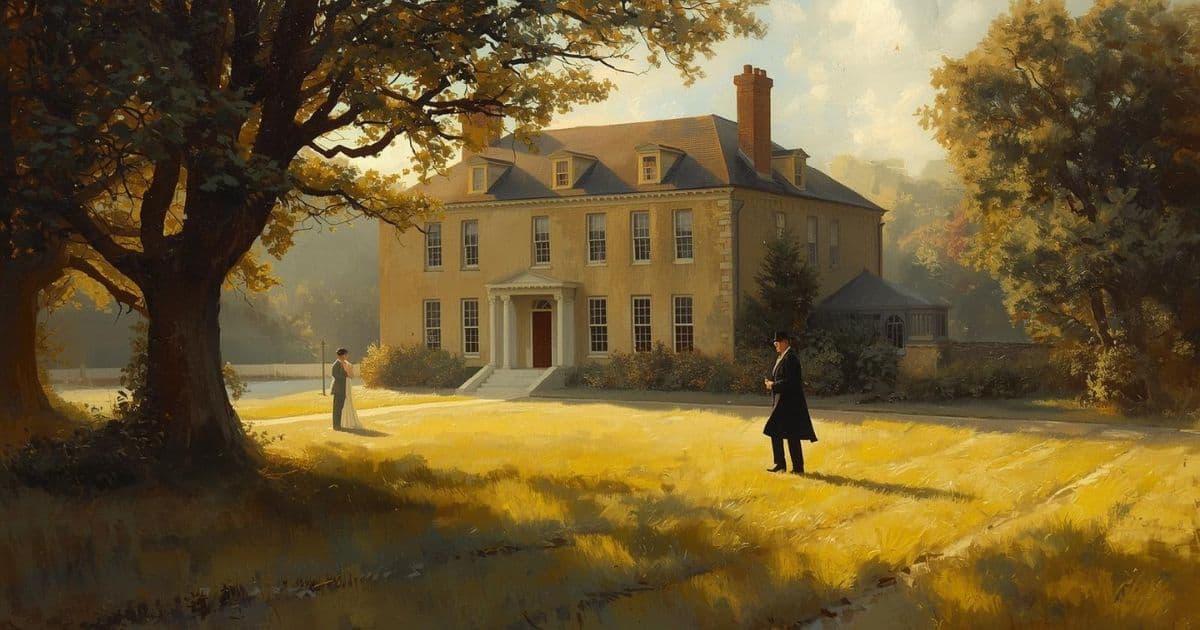
his five sisters and a cousin. And when the party entered the
assembly-room, it consisted of only five altogether: Mr. Bingley, his
two sisters, the husband of the eldest, and another young man.
Mr. Bingley was good-looking and gentlemanlike: he had a pleasant
countenance, and easy, unaffected manners. His sisters were fine women,
with an air of decided fashion. His brother-in-law, Mr. Hurst, merely
looked the gentleman; but his friend Mr. Darcy soon drew the attention
of the room by his fine, tall person, handsome features, noble mien, and
the report, which was in general circulation within five minutes after
his entrance, of his having ten thousand a year. The gentlemen
pronounced him to be a fine figure of a man, the ladies declared he was
much handsomer than Mr. Bingley, and he was looked at with great
admiration for about half the evening, till his manners gave a disgust
which turned the tide of his popularity; for he was discovered to be
proud, to be above his company, and above being pleased; and not all his
large estate in Derbyshire could save him from having a most forbidding,
disagreeable countenance, and being unworthy to be compared with his
friend.
Mr. Bingley had soon made himself acquainted with all the principal
people in the room: he was lively and unreserved, danced every dance,
was angry that the ball closed so early, and talked of giving one
himself at Netherfield. Such amiable qualities must speak for
themselves. What a contrast between him and his friend! Mr. Darcy danced
only once with Mrs. Hurst and once with Miss Bingley, declined being
introduced to any other lady, and spent the rest of the evening in
walking about the room, speaking occasionally to one of his own party.
His character was decided. He was the proudest, most disagreeable man in
the world, and everybody hoped that he would never come there again.
Amongst the most violent against him was Mrs. Bennet, whose dislike of
his general behaviour was sharpened into particular resentment by his
having slighted one of her daughters.
Elizabeth Bennet had been obliged, by the scarcity of gentlemen, to sit
down for two dances; and during part of that time, Mr. Darcy had been
standing near enough for her to overhear a conversation between him and
Mr. Bingley, who came from the dance for a few minutes to press his
friend to join it.
“Come, Darcy,” said he, “I must have you dance. I hate to see you
standing about by yourself in this stupid manner. You had much better
dance.”
“I certainly shall not. You know how I detest it, unless I am
particularly acquainted with my partner. At such an assembly as this, it
would be insupportable. Your sisters are engaged, and there is not
another woman in the room whom it would not be a punishment to me to
stand up with.”
“I would not be so fastidious as you are,” cried Bingley, “for a
kingdom! Upon my honour, I never met with so many pleasant girls in my
life as I have this evening; and there are several of them, you see,
uncommonly pretty.”
“You are dancing with the only handsome girl in the room,” said Mr.
Darcy, looking at the eldest Miss Bennet.
“Oh, she is the most beautiful creature I ever beheld! But there is one
of her sisters sitting down just behind you, who is very pretty, and I
dare say very agreeable. Do let me ask my partner to introduce you.”
[Illustration:
“She is tolerable”
[Copyright 1894 by George Allen.]]
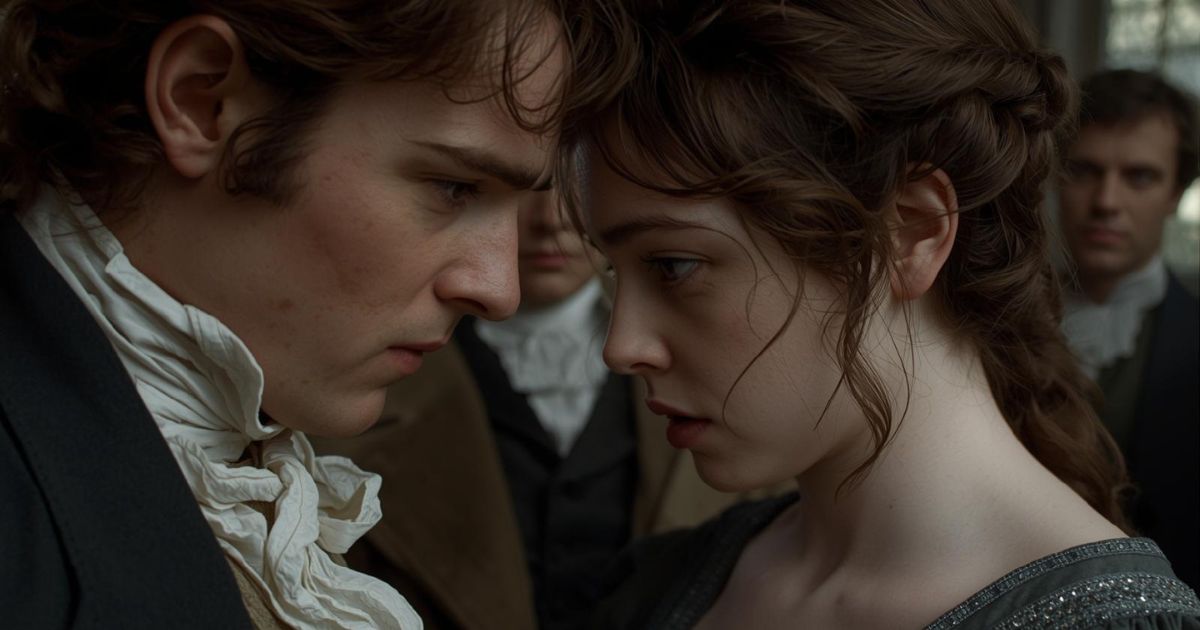
“Which do you mean?” and turning round, he looked for a moment at
Elizabeth, till, catching her eye, he withdrew his own, and coldly said,
“She is tolerable: but not handsome enough to tempt me; and I am in no
humour at present to give consequence to young ladies who are slighted
by other men. You had better return to your partner and enjoy her
smiles, for you are wasting your time with me.”
Mr. Bingley followed his advice. Mr. Darcy walked off; and Elizabeth
remained with no very cordial feelings towards him. She told the story,
however, with great spirit among her friends; for she had a lively,
playful disposition, which delighted in anything ridiculous.
The evening altogether passed off pleasantly to the whole family. Mrs.
Bennet had seen her eldest daughter much admired by the Netherfield
party. Mr. Bingley had danced with her twice, and she had been
distinguished by his sisters. Jane was as much gratified by this as her
mother could be, though in a quieter way. Elizabeth felt Jane’s
pleasure. Mary had heard herself mentioned to Miss Bingley as the most
accomplished girl in the neighbourhood; and Catherine and Lydia had been
fortunate enough to be never without partners, which was all that they
had yet learnt to care for at a ball. They returned, therefore, in good
spirits to Longbourn, the village where they lived, and of which they
were the principal inhabitants. They found Mr. Bennet still up. With a
book, he was regardless of time; and on the present occasion he had a
good deal of curiosity as to the event of an evening which had raised
such splendid expectations. He had rather hoped that all his wife’s
views on the stranger would be disappointed; but he soon found that he
had a very different story to hear.
“Oh, my dear Mr. Bennet,” as she entered the room, “we have had a most
delightful evening, a most excellent ball. I wish you had been there.
Jane was so admired, nothing could be like it. Everybody said how well
she looked; and Mr. Bingley thought her quite beautiful, and danced with
her twice. Only think of that, my dear: he actually danced with her
twice; and she was the only creature in the room that he asked a second
time. First of all, he asked Miss Lucas. I was so vexed to see him stand
up with her; but, however, he did not admire her at all; indeed, nobody
can, you know; and he seemed quite struck with Jane as she was going
down the dance. So he inquired who she was, and got introduced, and
asked her for the two next. Then, the two third he danced with Miss
King, and the two fourth with Maria Lucas, and the two fifth with Jane
again, and the two sixth with Lizzy, and the Boulanger----”
“If he had had any compassion for me,” cried her husband impatiently,
“he would not have danced half so much! For God’s sake, say no more of
his partners. O that he had sprained his ancle in the first dance!”
“Oh, my dear,” continued Mrs. Bennet, “I am quite delighted with him. He
is so excessively handsome! and his sisters are charming women. I never
in my life saw anything more elegant than their dresses. I dare say the
lace upon Mrs. Hurst’s gown----”
Here she was interrupted again. Mr. Bennet protested against any
description of finery. She was therefore obliged to seek another branch
of the subject, and related, with much bitterness of spirit, and some
exaggeration, the shocking rudeness of Mr. Darcy.
“But I can assure you,” she added, “that Lizzy does not lose much by not
suiting his fancy; for he is a most disagreeable, horrid man, not at
all worth pleasing. So high and so conceited, that there was no enduring
him! He walked here, and he walked there, fancying himself so very
great! Not handsome enough to dance with! I wish you had been there, my
dear, to have given him one of your set-downs. I quite detest the man.”
[Illustration]
Master this chapter. Complete your experience
Purchase the complete book to access all chapters and support classic literature
As an Amazon Associate, we earn a small commission from qualifying purchases at no additional cost to you.
Available in paperback, hardcover, and e-book formats
Let's Analyse the Pattern
Why This Matters
Connect literature to life
This chapter teaches how to recognize when initial judgments create self-reinforcing cycles of mutual dislike and how to consciously interrupt those patterns.
Now let's explore the literary elements.
Key Quotes & Analysis
"She is tolerable, but not handsome enough to tempt me, and I am in no humor at present to give consequence to young ladies who are slighted by other men."
Context: Darcy dismisses Elizabeth when Bingley suggests he dance with her.
This cutting remark reveals Darcy's pride and snobbery while wounding Elizabeth's self-esteem. It establishes the central conflict between them and shows how cruel casual comments can be when overheard.
"I could easily forgive his pride, if he had not mortified mine."
Context: Elizabeth reflects on her feelings about Darcy after the ball.
This quote captures the heart of their conflict - it's not just about his arrogance, but about how his behavior made her feel small and rejected. Pride wounded by pride creates lasting resentment.
"His character was decided. He was the proudest, most disagreeable man in the world, and everybody hoped that he would never come there again."
Context: Describing the general opinion of Darcy after the assembly.
Shows how quickly and completely a community can turn against someone based on first impressions. Darcy's social failure at the ball creates a reputation that will be hard to overcome.
Thematic Threads
Pride
In This Chapter
Darcy's refusal to dance with locals and dismissive comment about Elizabeth reveal his social arrogance
Development
Introduced here as Darcy's defining characteristic that will drive the central conflict
In Your Life:
When have you let your own pride or sense of superiority prevent you from connecting with people you initially dismissed as 'beneath' you?
Prejudice
In This Chapter
Elizabeth immediately judges Darcy as disagreeable based on overhearing one cruel comment
Development
Introduced here as Elizabeth's reactive judgment that will color all future interactions
In Your Life:
How often do you form lasting negative opinions about someone based on a single overheard comment or brief interaction?
Social Class
In This Chapter
The ball reveals stark divisions between landed gentry (Darcy) and country society (Bennets)
Development
Builds on earlier hints, now showing how class differences create social barriers
In Your Life:
In what situations do you find yourself feeling either superior or inferior to others based on education, income, or social background?
First Impressions
In This Chapter
Bingley charms everyone while Darcy alienates them, setting up contrasting reputations
Development
Introduced here as the foundation for all character relationships going forward
In Your Life:
Think of someone you instantly liked versus someone you instantly disliked when you first met them - how accurate were those snap judgments?
Performance
In This Chapter
The ball becomes a stage where everyone performs their social roles and judges others' performances
Development
Builds on the visiting ritual from earlier chapters, now showing public social theater
In Your Life:
When you're at parties or social events, how much are you performing a version of yourself rather than being authentic?
You now have the context. Time to form your own thoughts.
Discussion Questions
- 1
What specific behaviors make Bingley popular at the ball while Darcy becomes the villain of the evening?
- 2
How does Elizabeth's overheard conversation with Darcy create a cycle where both characters reinforce each other's negative impressions?
- 3
Think of a time when you wrote someone off based on a first meeting - what behaviors or comments triggered your judgment, and how did that affect future interactions?
- 4
If you were Elizabeth's friend at the ball, what advice would you give her about handling Darcy's slight without letting it poison her opinion of him?
- 5
What does this chapter reveal about how social anxiety or discomfort can be misinterpreted as arrogance or rudeness?
Critical Thinking Exercise
Rewrite the Scene from Darcy's Perspective
Write a 200-word internal monologue from Darcy's point of view during the ball scene. Consider what might be driving his behavior - is he truly arrogant, socially awkward, protecting himself, or something else entirely? What is he thinking when he makes the 'tolerable' comment about Elizabeth?
Consider:
- •What pressures or expectations might Darcy feel as a wealthy man in unfamiliar social territory?
- •How might his friendship with the outgoing Bingley make him feel more self-conscious about his own social skills?
- •What assumptions might he be making about the local society, and where do those assumptions come from?
Coming Up Next...
Chapter 4
The aftermath of the assembly brings new developments as the Bennet family processes the evening's events. Jane's growing attachment to Bingley becomes impossible to hide, while Elizabeth and her sisters discuss the contrasting personalities of the Netherfield party.